
TP
TRAVPOST

California Road Trip

The Ultimate Pacific Coast HighwayRoad Trip

San Francisco to San Diego through Monterey, Carmel, Big Sur, Hearst Castle, San Luis Obispo, Santa Barbara, Malibu and Los Angeles — with enough time to actually enjoy the road rather than simply ticking off stops.

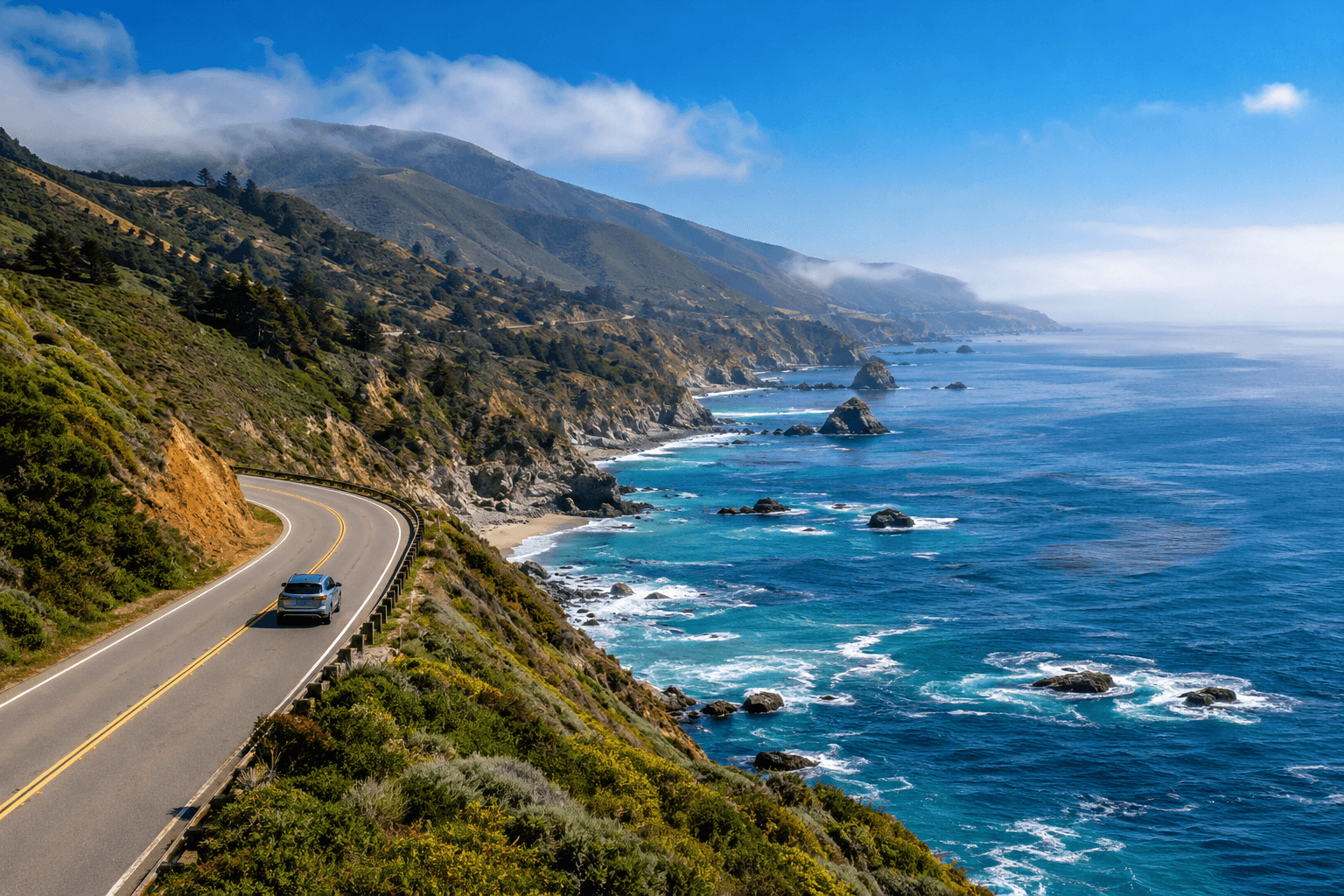
Pacific Coast Highway road trip along the California coast

Recommended length

10 days

Fast version

7 days

Start

San Francisco

Finish

San Diego

Best for

Coast, food, cities & scenery

Car

One-way rental works best

The route

Why this is one of the world's great road trips

The Pacific Coast Highway is not great because it is the fastest way to travel through California. It is great because it gives you a reason to slow down.

Within one trip you get San Francisco, the Monterey Peninsula, the cliffs and redwoods of Big Sur, the Central Coast, Spanish-influenced Santa Barbara, the beaches of Malibu, Los Angeles and finally San Diego.

The biggest mistake is building the itinerary like a list of cities connected by driving times. Big Sur can show as only a few hours of driving, but that misses the point. Viewpoints, walks, state parks, food stops and the simple fact that you will want to stop repeatedly can turn a short-looking section into the best day of the trip.

For that reason, our preferred version is ten days. Seven works if that is all you have, but ten gives the route room to breathe.

Highway 1 status

Big Sur is open through the Regent's Slide section.

The long-term Regent's Slide closure reopened in January 2026. Highway conditions can still change after storms, rockfall or emergency maintenance, so check Caltrans immediately before travelling rather than relying on an old itinerary or saved map.

Before Big Sur

Download offline maps

Mobile service is extremely limited in parts of Big Sur.

10-day itinerary

The route we would actually recommend

This version balances driving with time on the ground. The aim is to remember the places, not just the road between them.

Day 1

San Francisco

Arrive in San Francisco

Driving

Minimal driving

Overnight

San Francisco

Guide spend

$120–$300+ pp

Do not waste your first day sitting in traffic. Use it to settle in, explore on foot and start the trip properly the following morning.

Morning

Arrive, collect your luggage and get into the city. If your flight lands early, leave the rental car until later if it saves you a day of parking and rental charges.

Afternoon

Walk the waterfront, explore the Ferry Building area, North Beach or Chinatown, then head toward the Golden Gate viewpoints if the weather is clear.

Evening

Have dinner somewhere you actually want to spend time rather than chasing another attraction. San Francisco is one of the best food stops of the entire trip.

TravPost verdict

Worth it

Golden Gate viewpoints and a relaxed first evening.

Skip if rushed

Trying to squeeze Alcatraz, Fisherman’s Wharf, Chinatown and the Golden Gate Bridge into the same afternoon.

Splurge here

A great first-night meal.

Save money

Stay somewhere with parking included if you already have the car.

Day 2

San Francisco → Monterey & Carmel

San Francisco → Half Moon Bay → Santa Cruz → Monterey → Carmel

Driving

Around 3–4 hours before stops

Overnight

Monterey or Carmel

Guide spend

$110–$260+ pp

This is the first proper driving day. Leave San Francisco early enough that the day feels like a road trip rather than a late transfer to Monterey.

Morning

Head south toward Half Moon Bay and continue down the coast. Keep the stops selective: you are building toward Monterey and Carmel, not trying to photograph every beach.

Afternoon

Explore Monterey before continuing to Carmel-by-the-Sea. If you want to drive 17-Mile Drive, give it enough time rather than squeezing it in at sunset.

Evening

Spend the evening walking Carmel. It is compact, easy to explore and makes a much nicer finish to the day than immediately returning to the car.

TravPost verdict

Worth it

Carmel-by-the-Sea and the Monterey coastline.

Skip if rushed

Too many minor pull-offs north of Santa Cruz if they force you to rush Carmel.

Splurge here

Stay in Carmel if the accommodation budget allows.

Save money

Stay in Monterey and visit Carmel before dinner.

Day 3

Monterey & Carmel

Monterey Peninsula

Driving

Light local driving

Overnight

Monterey or Carmel

Guide spend

$90–$240+ pp

A second night here stops the trip becoming a daily packing exercise and gives you time to enjoy the peninsula before Big Sur.

Morning

Choose one major activity: Monterey Bay Aquarium, a whale-watching trip, or a slower morning around Cannery Row and the waterfront.

Afternoon

Spend time in Carmel, walk Carmel Beach and explore the village. If you skipped 17-Mile Drive yesterday, this is the better day to do it.

Evening

Keep the evening relaxed. Tomorrow is the day you want an early start and plenty of daylight.

TravPost verdict

Worth it

Giving Monterey and Carmel a full day instead of treating them as a lunch stop.

Skip if rushed

Doing both an aquarium visit and a long whale-watching trip unless you deliberately want a very full day.

Splurge here

A whale-watching trip or a standout dinner.

Save money

Beaches, coastal walks and Carmel itself cost very little.

Day 4

Carmel → Big Sur → Cambria

Carmel → Bixby Bridge → Big Sur → Ragged Point → Cambria

Driving

Around 3 hours without stops — allow most of the day

Overnight

Cambria or San Simeon

Guide spend

$100–$250+ pp

This is the day the trip is really about. The mistake is treating Big Sur as a road you simply need to get through. Give it the majority of your daylight.

Morning

Leave early. Stop selectively around the northern Big Sur coast, then continue toward the state parks and viewpoints. Download maps before you leave because phone service can be unreliable.

Afternoon

Continue south slowly, building in time for walking rather than only roadside stops. Stop around Ragged Point before continuing toward San Simeon or Cambria.

Evening

Check into Cambria or San Simeon and have an easy evening. You will have covered relatively few miles compared with later days, but this should still feel like one of the fullest days.

TravPost verdict

Worth it

Big Sur itself. Do not rush it.

Skip if rushed

Trying to stop at every turnout. Pick the best ones and leave time to actually explore.

Splurge here

A memorable lunch or overnight stay with a coastal view.

Save money

Use the same-day California State Parks day-use access where applicable.

Day 5

Hearst Castle → San Luis Obispo

Cambria → San Simeon → Morro Bay → San Luis Obispo

Driving

Around 1.5–2 hours before stops

Overnight

San Luis Obispo

Guide spend

$120–$260+ pp

After a scenery-heavy day, this gives the trip a change of pace: Hearst Castle, wildlife, a harbour stop and a lively university town.

Morning

Book an early Hearst Castle tour if it is a priority. First-time visitors will usually get the most from one of the standard tours rather than trying to overcomplicate the visit.

Afternoon

Stop at the elephant seal viewing area if conditions and timing suit, then continue to Morro Bay before reaching San Luis Obispo.

Evening

Walk downtown San Luis Obispo, eat locally and enjoy a night where you are not chasing a sunset viewpoint.

TravPost verdict

Worth it

Hearst Castle if architecture and history interest you.

Skip if rushed

A long castle visit if you know large historic houses are not your thing — the coast itself remains the star.

Splurge here

Hearst Castle plus a good dinner in SLO.

Save money

Morro Bay and the elephant seal viewpoint are easy low-cost stops.

Day 6

San Luis Obispo → Santa Barbara

San Luis Obispo → Pismo Beach → Santa Ynez Valley → Santa Barbara

Driving

Around 2–3 hours before stops

Overnight

Santa Barbara

Guide spend

$130–$300+ pp

This is a deliberately flexible day. You can make it beach-focused, food-focused or turn inland briefly for wine-country scenery.

Morning

Have breakfast in San Luis Obispo and head toward Pismo Beach. Do not spend half the day there unless beach time is one of your main priorities.

Afternoon

Choose either a relaxed coastal route or a Santa Ynez Valley detour before arriving in Santa Barbara. Explore the waterfront and central area on foot.

Evening

Santa Barbara is worth an evening. Have dinner, walk the waterfront and stay central enough that you do not need to keep moving the car.

TravPost verdict

Worth it

Santa Barbara as an overnight stop, not just a coffee break.

Skip if rushed

Forcing wine tasting into the day if you are the only driver.

Splurge here

A central Santa Barbara hotel for one night.

Save money

Keep the afternoon coastal and use free beaches and walking routes.

Day 7

Santa Barbara → Malibu → Los Angeles

Santa Barbara → Ventura → Malibu → Santa Monica → Los Angeles

Driving

Around 2.5–4 hours depending on traffic

Overnight

Los Angeles

Guide spend

$130–$320+ pp

This is where traffic starts dictating the schedule. Leave yourself margin and do not build a plan that assumes Los Angeles driving times will behave.

Morning

Leave Santa Barbara and work south through Ventura toward Malibu. Pick one or two beach stops rather than losing hours getting in and out of traffic.

Afternoon

Continue through Malibu toward Santa Monica. Walk the beachfront and pier area before heading to your hotel.

Evening

Choose an LA neighbourhood for dinner and keep the evening geographically sensible. Crossing the city twice for food is not a good use of your road-trip time.

TravPost verdict

Worth it

Malibu plus Santa Monica as the transition into LA.

Skip if rushed

Building a schedule around five different Los Angeles neighbourhoods in one afternoon.

Splurge here

Stay near the part of LA you actually want to explore tomorrow.

Save money

Avoid expensive hotel parking by comparing it before booking.

Day 8

Los Angeles

Los Angeles

Driving

Variable — plan by neighbourhood

Overnight

Los Angeles

Guide spend

$100–$300+ pp

Los Angeles rewards planning by area. It punishes itineraries made from a checklist of attractions scattered across the whole city.

Morning

Choose one major zone: Hollywood and Griffith, the west side and beaches, or a museum-focused day. Start early if you want Griffith Observatory and popular viewpoints.

Afternoon

Stay in the same side of the city where possible. Build lunch, shopping and one major attraction around the area you already chose.

Evening

Use sunset for Griffith, a beach, rooftop or neighbourhood walk depending on where you are staying.

TravPost verdict

Worth it

One well-planned LA day rather than six rushed attractions.

Skip if rushed

Driving across the city repeatedly because a social-media list told you every stop was essential.

Splurge here

One attraction or experience you genuinely care about.

Save money

Griffith viewpoints, beaches and neighbourhood exploration.

Day 9

Los Angeles → Orange County → San Diego

Los Angeles → Laguna Beach → San Diego

Driving

Around 2.5–4 hours depending on traffic

Overnight

San Diego

Guide spend

$110–$260+ pp

Do not treat the final coastal section as just motorway time. Orange County gives you an easy final beach stop before San Diego.

Morning

Leave Los Angeles after the worst of the morning traffic if your schedule allows, or start very early. Head south toward Laguna Beach.

Afternoon

Spend a couple of hours in Laguna rather than trying to visit every coastal town. Continue to San Diego and check in before the evening.

Evening

Explore Little Italy, the waterfront or another central neighbourhood depending on where you are staying.

TravPost verdict

Worth it

Laguna Beach as the one Orange County stop.

Skip if rushed

Adding several similar beach towns simply because they are on the way.

Splurge here

A final San Diego dinner.

Save money

Beach time and waterfront walking.

Day 10

San Diego

San Diego

Driving

Light local driving

Overnight

Trip ends

Guide spend

$90–$250+ pp

Finish with a real destination day rather than dropping the car at the airport first thing. San Diego deserves more than being the endpoint on the map.

Morning

Choose Balboa Park, the waterfront or a beach-focused morning depending on your interests and flight time.

Afternoon

Spend the final hours somewhere easy to enjoy without creating airport stress. La Jolla works well if you have enough time and transport.

Evening

Return the rental car with fuel and timing sorted in advance. If you are staying another night, use this as a relaxed final evening instead.

TravPost verdict

Worth it

Giving San Diego at least one proper day.

Skip if rushed

A complicated last-day itinerary when you have a flight to catch.

Splurge here

One final experience or meal.

Save money

Balboa Park grounds, beaches and coastal walks.

Big Sur planning

The section you should plan around

Big Sur is spectacular, but it is also the part of the trip where road conditions, parking, daylight and weak phone signal matter most.

State parks

Allow around $10 per vehicle

Several Big Sur state parks currently use a $10 vehicle day-use charge. In many cases that payment can be used for entry to other participating California State Parks for the remainder of the same day.

Phone signal

Assume you will lose service

Download your route, hotel address, booking confirmations and important stops before leaving Carmel or Monterey.

Hearst Castle

Standard adult tours from $35

First-time visitors can usually start with one of the standard tours. Specialist options cost more, so choose based on how interested you are rather than assuming the most expensive tour is automatically best.

Shorter option

Only have 7 days?

Seven days still works, but something has to give. This version keeps Big Sur intact and removes some of the slower days.

Day 1

San Francisco

Arrive and explore the city.

Day 2

San Francisco → Monterey/Carmel

Drive south and spend the afternoon around the peninsula.

Day 3

Carmel → Big Sur → Cambria

Give Big Sur the full day.

Day 4

Hearst Castle → San Luis Obispo → Santa Barbara

A longer day, but manageable with an early start.

Day 5

Santa Barbara → Malibu → Los Angeles

Coastal stops before LA.

Day 6

Los Angeles

One properly planned LA day.

Day 7

Los Angeles → San Diego

Laguna Beach stop, then finish in San Diego.

What we would not do

We would not try to turn the 10-day itinerary into seven days simply by waking up earlier and driving later. That creates a tiring trip and removes the exact thing that makes Highway 1 worthwhile: stopping.

Trip budget

How much does a Pacific Coast Highway road trip cost?

These are broad planning ranges for a 10-day trip for two people sharing the car and room. Your biggest variables will usually be accommodation, rental-car pricing and how much time you spend in San Francisco and Los Angeles.

CostBudgetComfortHigher-end
Car rental$450–$700$650–$1,000$900–$1,500+
Fuel$120–$180$120–$200$150–$220
Accommodation$900–$1,500$1,600–$2,600$3,000–$6,000+
Food & drink$400–$650$700–$1,100$1,300–$2,500+
Parking & road costs$120–$220$150–$280$180–$350
Activities$100–$250$250–$500$500–$1,200+

Budget trip

~$2,100–$3,500

Approximate total for two, excluding flights.

Comfort trip

~$3,500–$5,700

Approximate total for two, excluding flights.

Higher-end

$6,000–$11,000+

Approximate total for two, excluding flights.

Rental car

Do you need the car for the entire trip?

Probably not. If you spend time in San Francisco before starting the road trip, collecting the car on departure day can save rental days and expensive city parking.

Our preferred setup

Fly into San Francisco and spend your first night without a car if that suits your flight schedule.

Collect the rental car when you are ready to leave the city, then return it in San Diego at the end of the route.

Compare the one-way drop fee against the cost and time of returning north. For this itinerary, a one-way rental is usually worth considering because it protects the route from a wasted return-driving day.

What car should you rent?

You do not need a huge SUV simply because it is a road trip. A comfortable midsize car is easier to park and usually cheaper to fuel.

Prioritise luggage space, comfort, automatic transmission if you want it, and a rental company with sensible one-way terms.

A convertible sounds perfect for Highway 1, but compare the price premium and luggage practicality before committing.

When to go

The best time for the Pacific Coast Highway

Spring

Excellent

Longer daylight, greener landscapes and generally a strong balance between weather and crowds.

Summer

Popular

Long days and busy destinations. Coastal fog can still be a factor, especially around San Francisco and parts of the Central Coast.

Early autumn

Our favourite

Often a great combination of pleasant weather and slightly calmer travel after the peak summer rush.

Winter

More variable

Lower demand can be attractive, but storms can affect road conditions around Big Sur. Keep the itinerary flexible.

Avoid these

Six mistakes that can ruin the road trip

Mistake 01

Planning every day around the driving time shown on a map

Road-trip days are not transfers. Parking, viewpoints, food stops, traffic and simply getting out of the car turn a three-hour drive into a full day very quickly.

Mistake 02

Giving Big Sur half a day

This is the part people remember. If your itinerary forces you to race through it to reach a hotel hours farther south, the route is too aggressive.

Mistake 03

Moving hotel every single night

A road trip still needs breathing room. Two nights around Monterey/Carmel and two nights in Los Angeles make the trip far easier to enjoy.

Mistake 04

Ignoring parking when comparing hotels

A cheaper hotel can stop being cheaper once nightly parking is added. Check parking charges before you book, especially in San Francisco and Los Angeles.

Mistake 05

Assuming Highway 1 is always open

Weather and landslides can affect the Big Sur section. Check official road conditions shortly before you travel and again before leaving Monterey or Carmel.

Mistake 06

Relying on mobile signal in Big Sur

Download your route, hotel details and important stops before you leave the Monterey Peninsula.

Packing

What we would actually bring

California looks consistently warm in photos. The reality is that one trip can involve a chilly San Francisco morning, windy Big Sur viewpoints and a hot afternoon farther south.

Layers rather than one heavy coat

Comfortable walking shoes

Refillable water bottle

Offline maps

Car phone charger

Sunglasses & sunscreen

Small day bag

Flexible clothes for coastal evenings

FAQ

Pacific Coast Highway questions

How many days do you need for the Pacific Coast Highway?

Seven days is enough for a strong one-way trip, but ten days is much better if you want San Francisco, Monterey, Big Sur, Santa Barbara, Los Angeles and San Diego to feel like destinations rather than overnight stops.

Which direction should you drive?

North to south is the classic choice because the ocean is on the passenger side of the road and coastal pull-offs are generally easier to access. The trip still works south to north if flights or rental prices make that route better.

Do you need a rental car in San Francisco?

Not necessarily. If you are spending a full day or two in San Francisco before the road trip starts, collecting the car when you leave can avoid unnecessary rental and parking costs.

Is Big Sur open?

Highway 1 reopened through the Regent's Slide section in January 2026. Conditions can still change because of weather, rockfall and maintenance, so always check Caltrans shortly before driving the route.

Is Hearst Castle worth it?

It is worthwhile if you enjoy architecture, interiors and history. If your priority is purely coastal scenery, it is one of the easiest paid attractions to remove from the itinerary without damaging the road trip.

Can you do this trip in five days?

You can physically drive it, but it becomes much more of a transfer itinerary. If you only have five days, consider ending in Los Angeles rather than adding San Diego.

Final verdict

The best version of this trip is the one that gives you time to stop.

San Francisco and Los Angeles may be the famous names on the map, but Monterey, Carmel, Big Sur and the Central Coast are what turn this into a road trip rather than a multi-city holiday. Protect those days, leave space in the schedule and resist the urge to add every possible stop.